For EPCs and procurement
- Lower module purchase costs
- More margin, or a sharper project price
- Straightforward replacement, with compatibility confirmed by your team
- We supply the modules; you keep the system design

Elastia is a UK materials science company that develops and manufactures membrane modules for biomethane upgrading. The same or better performance, at a lower cost to both the EPC and the end operator.
01 What we offer
For EPCs and procurement
For operators and EPC sales
02 Performance and evidence
Cost less to buy
20–30%
indicative reduction in module purchase cost
The same biomethane purity with approximately 30% less membrane material, which makes up most of a module's cost.
Cost less to run
~20%+
lower upgrading energy costs
Better cash flow, ROI and payback, every year the plant runs. Calculated for your site.
Last longer
5,000+ h
of comparative testing logged, and ongoing
Lower performance degradation than all major competitor materials tested.
More revenue potential
99.9%+
CH₄ and CO₂ product purity, after conditioning
More saleable biomethane, and gas for higher-value applications.
Evidence from a live biomethane site
Comparative field test at an operating biomethane plant, with both modules on the same pretreated digester gas (about 62% CH₄ / 38% CO₂). For operators, higher throughput per module could mean fewer modules, or lower operating pressure, for the same biogas flow.
Permeate flow, Nm³/h
Low · ≈6.5–6.8 bar
Medium · Elastia 11.4 / commercial 10.0 bar
High · ≈15.0–15.2 bar
Based on previous experimental and live-site results. All benefits can be achieved together, but not all figures shown at once; results depend on feed gas and configuration.
We can offer experimental and simulation data upon request →03 Our technology
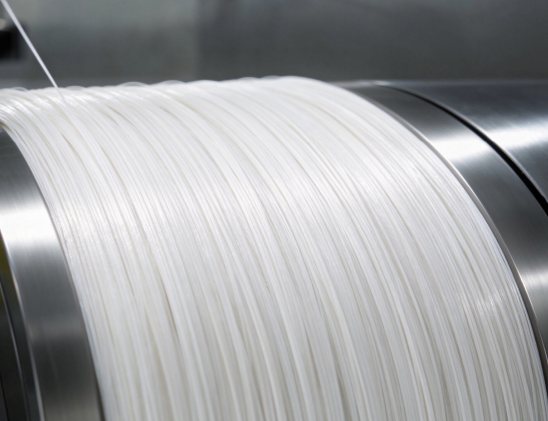
Built on more than a decade of UK research. We design membrane materials at the molecular level.
We model performance against your product specification stage by stage, including oxygen.
Tailored over time. Our R&D can develop module variants for demanding site or regulatory requirements, such as meeting tight oxygen limits or minimising methane slip.
Formats. Standard 4-, 6- and 8-inch modules, with custom 12–16-inch diameters on request. End connections designed around common upgrader configurations. Replace cartridges at changeover, or run ours in parallel first.
Bio-LNG ready after polishing. Contaminant limits and technical data per size on request →
— Module range
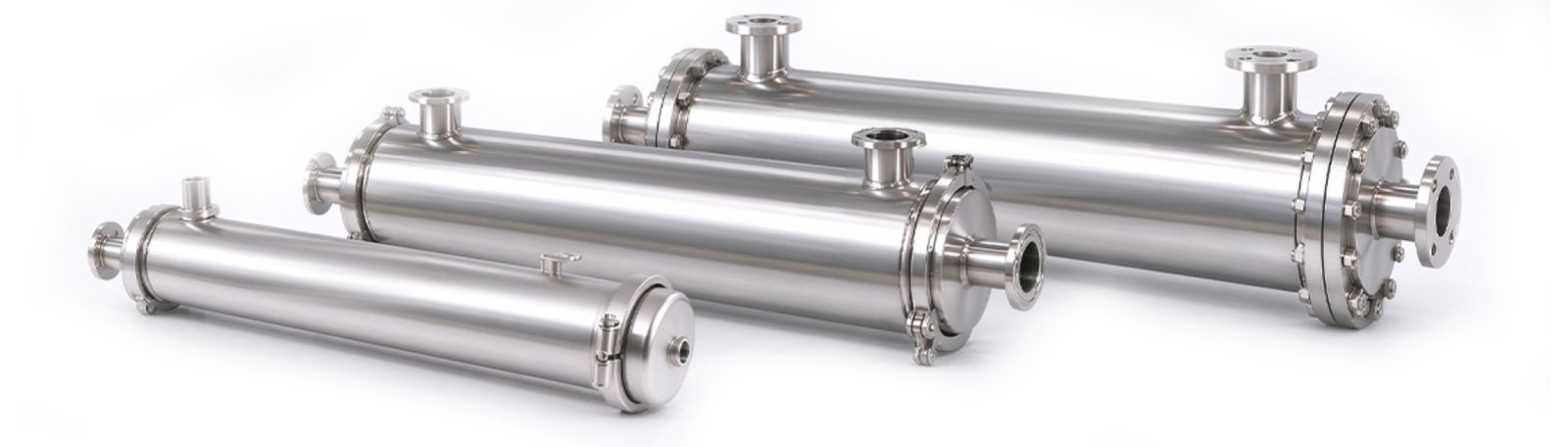
Choose the module size that fits the gas flow, run modules in parallel, and add more as feedstock grows.
Small and farm-scale sites
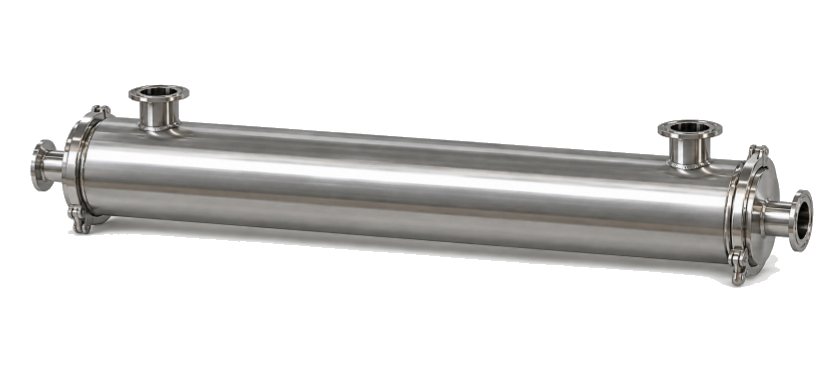
Compact modules for smaller gas flows. Also suited to pilots and side-by-side trials before a full changeover.
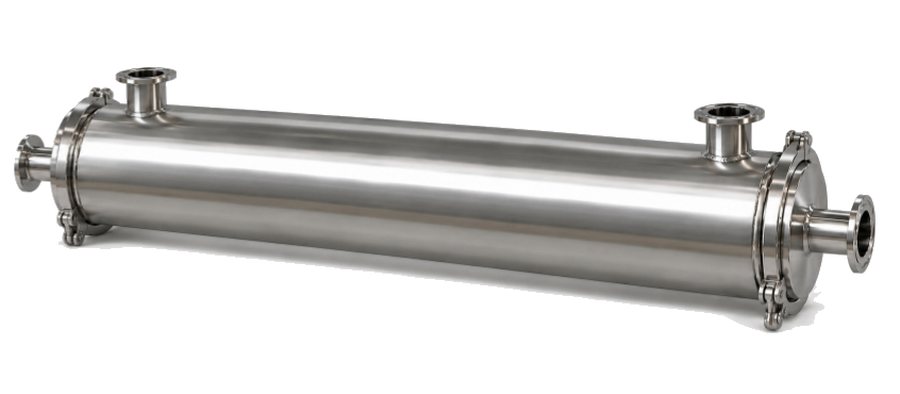
Mid-size sites
For agricultural and waste sites. Several modules in parallel match capacity to the gas flow without oversizing.
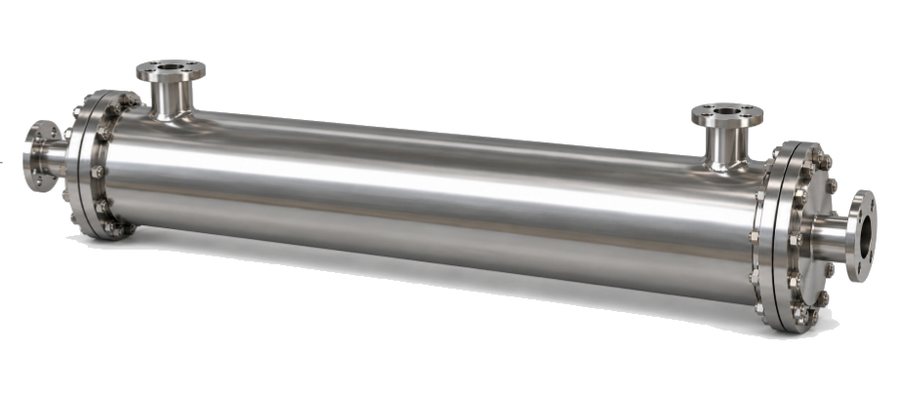
Large central plants
Fewer, larger modules for higher gas flows.
Custom 12–16-inch diameters on request. Module size, count and stage configuration are confirmed by modelling against each site's gas flow and specification.
— From feedstock to revenue
Our modules separate biogas into biomethane and a CO₂-rich stream. With conditioning, that CO₂ can be sold or used.
Biogas from
Gas pretreatment
Elastia membrane modules
Biomethane
CO₂ stream
We are testing agricultural-waste biogas and landfill gas, and welcome opportunities to test across all biogas feedstocks. End uses depend on the site, gas specification and local market; CO₂ needs further conditioning for most uses.
04 Joint technical evaluation
Start with a first technical call. We then model the business case using your site's data and agree how to test. You provide the gas data and judge the results; our scientists carry out all material development.
Meet your technical team and agree priorities and a suitable site or project.
Model the business case using your site's data, after a first technical call.
Agree success criteria, then test at our London laboratory, on site, or both.
Review performance and economics, then agree commercial terms.
For operators. Start with a metered trial alongside your existing modules, where the upgrader allows, or a swap at your next membrane changeover. We work with your EPC or OEM.
Discuss your project →05 About Elastia
Materials scientists and engineers, with biomethane upgrading at the centre of our work.
— Our sites
Factory · Hangzhou, China


Laboratory · UCL East, London


06 Questions
Standard 4-, 6- and 8-inch modules, with custom 12–16-inch diameters on request. End connections are designed around common upgrader configurations, and compatibility is confirmed by your team. Replace cartridges at changeover, or run ours in parallel first.
4-inch modules suit small and farm-scale sites and trials; 6-inch modules run in parallel at mid-size sites; 8-inch modules suit large central plants. Custom 12–16-inch diameters are available on request. We confirm size, count and stage configuration by modelling against your site's gas flow and specification.
With a first technical call. We then model the business case using your site's data, agree success criteria and test at our London laboratory, on site, or both.
Not to start. Detailed data can follow under NDA.
Agricultural-waste biogas and landfill gas. We welcome opportunities to test across all biogas feedstocks.
Research and gas testing at our laboratory at UCL East, London. Modules are produced in Hangzhou, China, where module production started in Q4 2026.
Yes, after polishing. We confirm the configuration for each site.
First shipments are planned from Q1 2027.
No. All benefits can be achieved together, but not all figures shown at once; results depend on feed gas and configuration.
07 Contact
No detailed gas data needed to start. That can follow under NDA.
hello@elastialabs.com08 Looking ahead
Biomethane upgrading is our focus today. Our wider ambition is to apply gas separation technologies to circular processes that turn waste-derived gases into valuable and sustainable energy and chemicals products.